When Intelligence Became Cheap · Volume 2 · visual edition
Volume 2 in one hour
This condensed edition of Volume 2 brings together the one-page guides for the approved chapters and the final appendix. It includes the Author's Note, Chapters 1 through 11, the epilogue, and the appendix on AGI without the fog. You will move through process redesign around AI, the shift from output to outcome, teams with agents, the one-person company, an affordable AI staff for small and midsize businesses, the agent as customer, children in a world of cheap answers, the new labor economy, the physical rails of AI, four scenarios for 2030, the change compass, the final question of who holds the wheel, and five practical questions to replace fear of AGI.
This is not a substitute for the full manuscript. It is a quick route through the approved material in Volume 2 and a way to test whether the larger argument holds together: redesigned processes, verified outcomes, teams with agents, functions run through agents, an affordable AI staff for small businesses, the agent as customer, machine-readable trust, a new place for children to grow, a career ladder you can own, a map of the rails behind cheap intelligence, a portfolio of moves for different futures, a practical adoption path, final responsibility for direction, and a clear view of AGI as a ladder of capabilities.
Front matter. Entering Volume 2
Author's Note. When the world around us has to change
Part III. Business: AI changes the system, not just the tasks
Chapter 1. AI is a redesign, not a plug-in
Chapter 2. More output does not mean more value
Chapter 3. A team with agents
Chapter 4. The one-person company
Chapter 5. Small business: AI as an affordable staff
Chapter 6. When the customer is not human
Part IV. Beyond the individual and the company
Chapter 7. Children: what to teach and where to lead them
Chapter 8. The new utility economy: labor markets and platforms
Chapter 9. Physical AI and who owns the rails
Chapter 10. The future in 2030: four scenarios
Finale
Chapter 11. The change compass
Epilogue. Who holds the wheel
Appendix. Will AI replace us? AGI without the fog
When Intelligence Became Cheap
Volume 2 · Author's Note
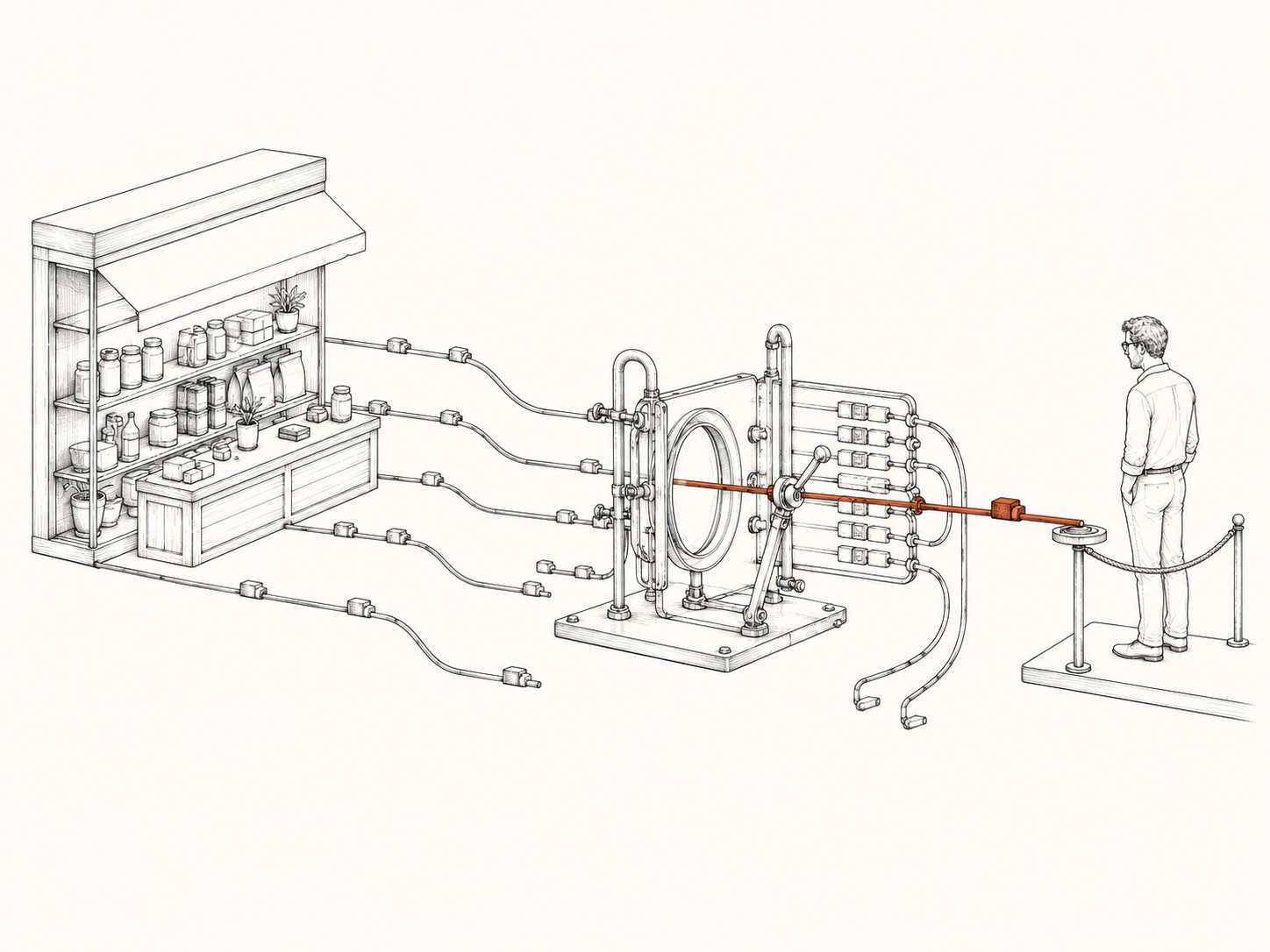
The customer is still there. An agent now stands between you
Volume 2 takes the main law of Volume 1 to a new scale. The cost is falling not only for personal output, but also for the work of entire departments, companies, and markets.
When an agent chooses, the market sees only businesses it can find, understand, and verify.
The opening in four steps
01
The agent enters your day
It sorts email, fills a cart, compares terms, and prepares an action. This is no longer a chat with a model. It is an operating loop.
02
You may never be seen
If the agent cannot find, understand, and verify your offer, you have not lost to a competitor. At this new point of choice, you simply do not exist.
03
The scale has grown
Output first became cheaper at one person's desk. Now it is becoming cheaper across departments and industries, while value shifts toward outcomes and responsibility.
04
You need rails
When a machine pays, AI slogans do not matter. Rules do: who assigned the task, who checked it, who signed off, and who is responsible for a mistake.
What changes for business
Layer
Old foundation
New test
Storefront
Website, shelf, packaging, recognition
Visibility to the agent: structured data, terms, price, trust
Sales
Advertising, impulse, the usual channel
Access to the customer through the system that now filters the choice
Expertise
"I know, and you do not"
Basic knowledge gets cheaper. Personalization, responsibility, and liability get more expensive.
Trust
A human face and reputation
A process: who checks, who signs off, and who fixes a mistake
Two paths through Volume 2
Manager
The question is no longer "How can AI make people faster?" It is how to build a team, process, verification system, and clear ownership around people and agents.
Founder or small business
Building has become cheaper, but delivering value to the customer has become harder. You need visibility, trust, and access to demand.
Main point
Volume 1 asked how a person can remain useful. Volume 2 asks a harder question: what should a business do when an agent increasingly chooses, compares, and pays?
When Intelligence Became Cheap
Volume 2 · Chapter 1
AI creates value through a redesign of work, not as a plug-in
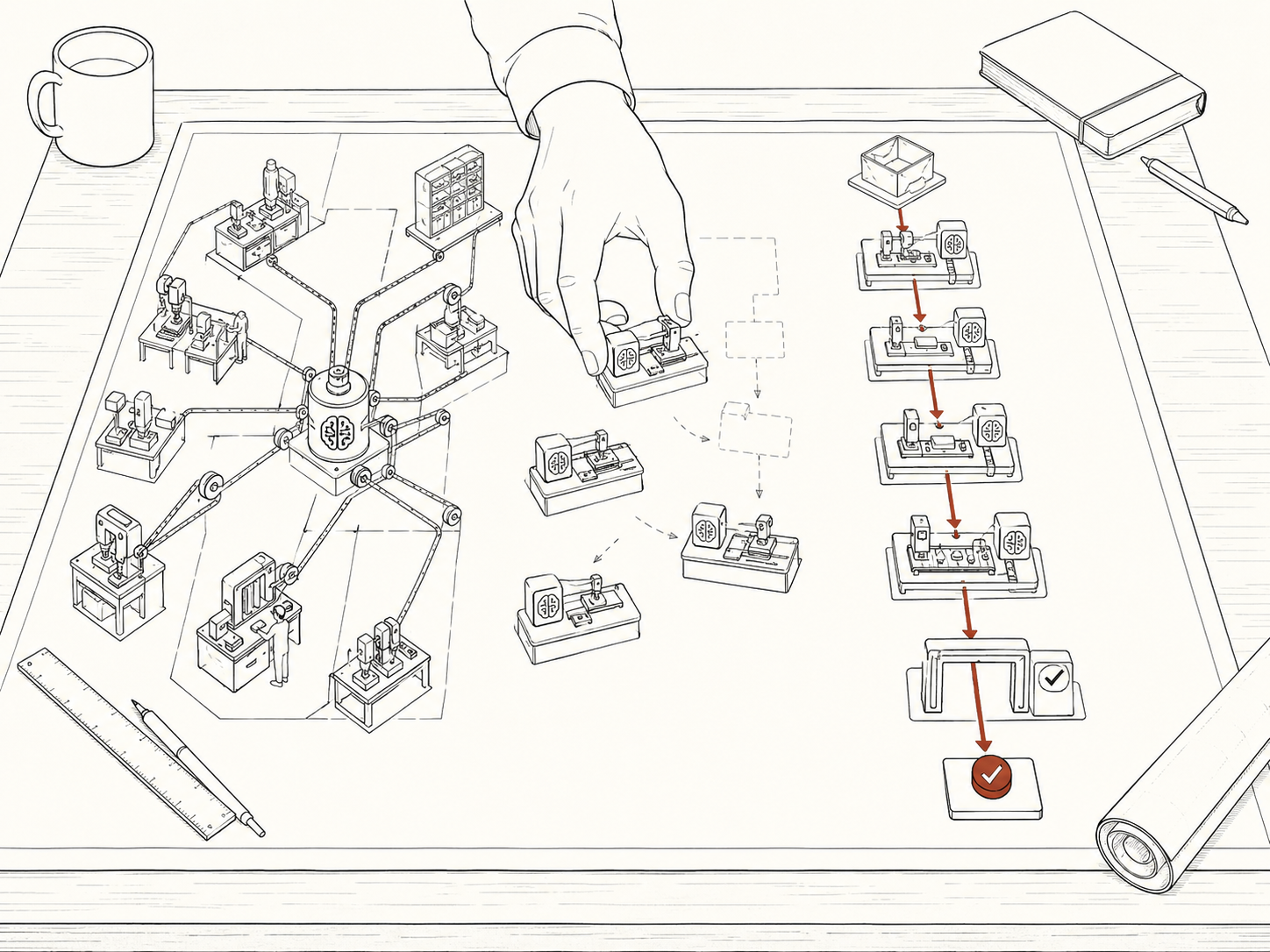
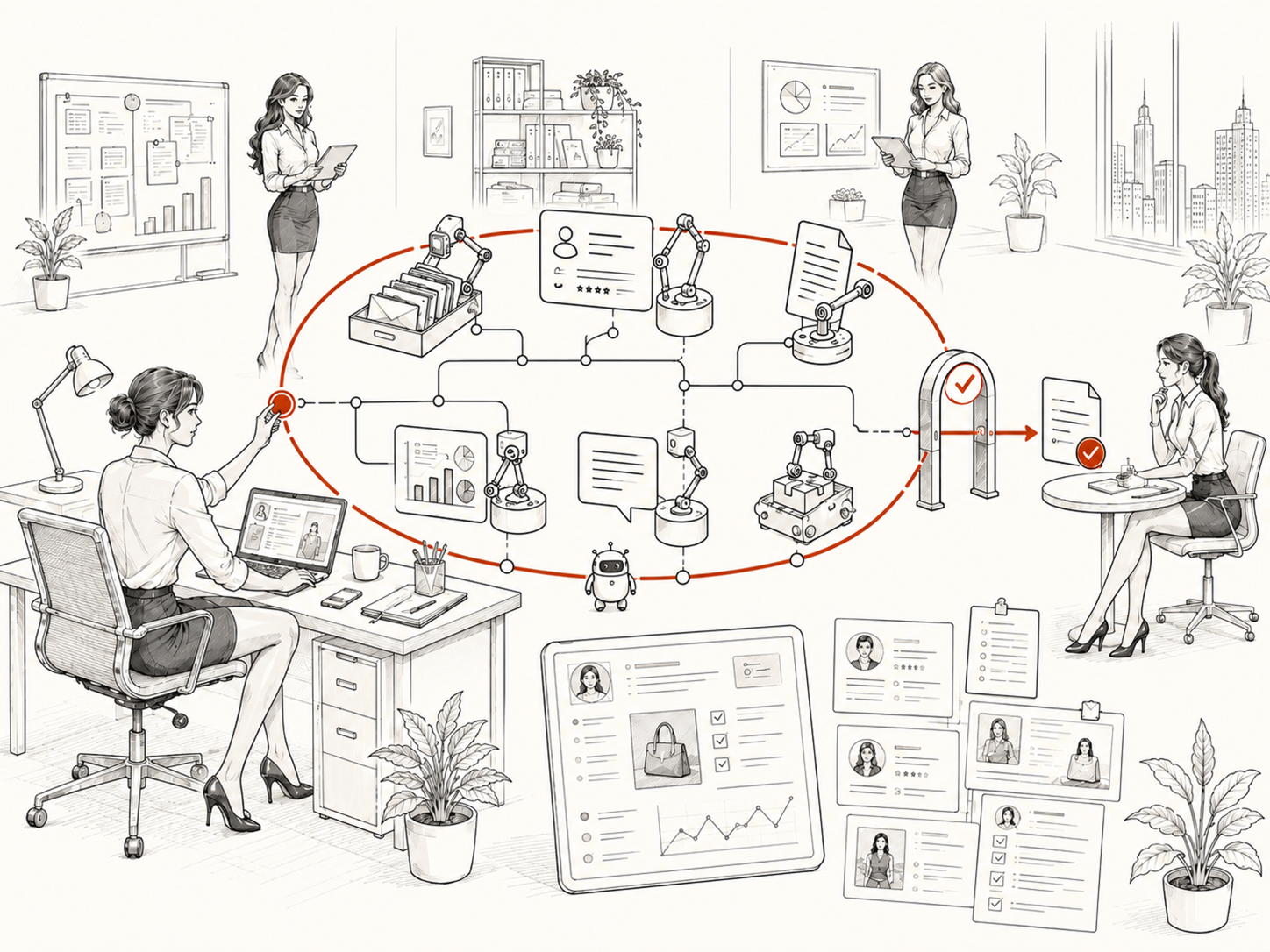
The chapter asks one question: are you bolting AI onto an old process, or rebuilding the process around the new economics of cheap intelligence?
The new motor does not create the value. The redesigned factory does.
The chapter in four steps
01
Pilots do not move the P&L
Licenses, assistants, and training may help people work faster without changing the company's cycle time, cost, risk, or financial results.
02
We have seen this before
Electricity paid off only when factories were rebuilt around the new source of power, not when owners simply replaced a motor.
03
There are three scales
A point solution speeds up one step. An application changes a procedure. A system changes roles, metrics, and the design of work.
04
Redesign wins
The advantage goes to the company that proves the new process economics first, not the one with the loudest model announcement.
Cosmetic AI or a real redesign
Signal
Cosmetic AI
Redesign
Work map
An assistant was added to the old path
The sequence of steps was redrawn for AI
Roles
People simply use the model
Someone owns the AI process and its outcome
Metrics
Documents, emails, and prompts are counted
Speed, quality, risk, and outcomes are measured
Control
"Looks fine" and manual trust
Quality checks happen before an expensive mistake
Money
Minutes saved disappear at the next handoff
Cycle time, cost, or process margin changes
Maturity ladder
0 to 2 · cosmetic
No AI, scattered experiments, or personal productivity only. Work feels easier, but the organization still follows the old rules.
3 to 5 · redesign
A team process, operating model, or AI-native business. Roles, KPIs, controls, and the economics all change.
Main point
A company does not lose because it lacks the newest model. It loses when it keeps managing work by the old rules after the cost of doing that work has changed.
When Intelligence Became Cheap
Volume 2 · Chapter 2
Value comes from an outcome that reaches the customer, not from output
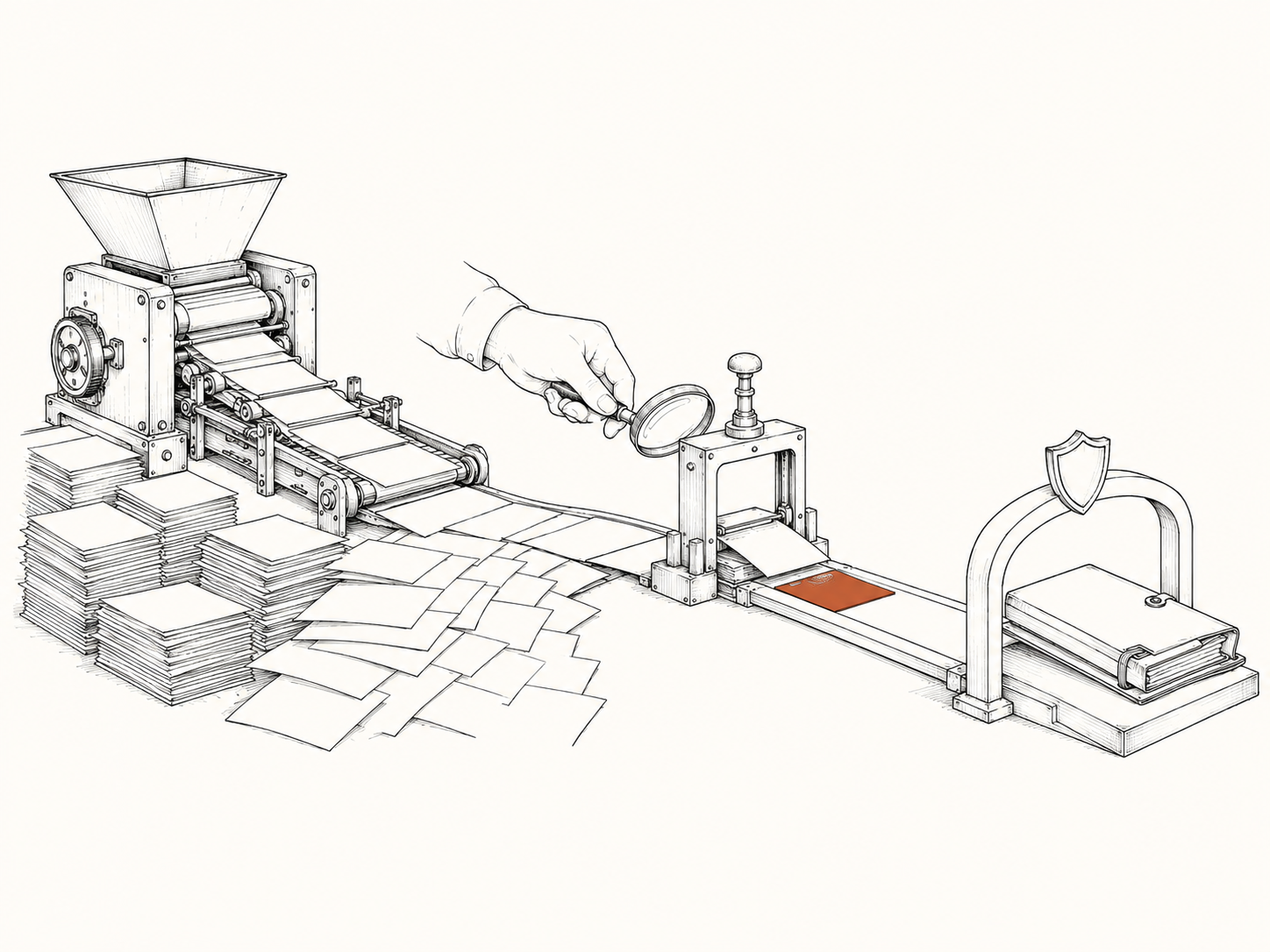
The chapter asks what has actually changed for the customer, the process, and the money, not how many artifacts AI produced.
Cheap output helps only when it is part of a value stream.
The chapter in four steps
01
Output gets cheaper
Texts, reports, and drafts become nearly free. That does not mean the business has gained value.
02
Outcomes cost more
An outcome exists when the work reaches a customer, a decision, or the bottom line instead of stalling in artifact production.
03
Verification matters
Evaluation, flow metrics, and stop rules turn a smooth model response into a working process.
04
The human stays
When a mistake is expensive or a decision is ambiguous, the human does not disappear. The human becomes the point of accountability.
Change what you count
Point
What to examine
What changes
What you counted
Emails, reports, prompts, generation speed
Decision speed, quality, risk, and value delivered
Where it goes wrong
A polished pile of work looks like progress
The value stream may still be blocked before it reaches the customer
What to fix
Not the model by itself
The process, verification, metrics, and ownership
What to take with you
Professional
Do not celebrate the number of drafts. Prove that the outcome improved.
Manager
Measure the value stream and the point of verification, not team activity.
Founder
Buy a shorter path to the customer and revenue, not more generation.
Main point
AI produces more. A business wins only when more value reaches the customer.
When Intelligence Became Cheap
Volume 2 · Chapter 3
A team with agents depends on its operating loop, not its bot count
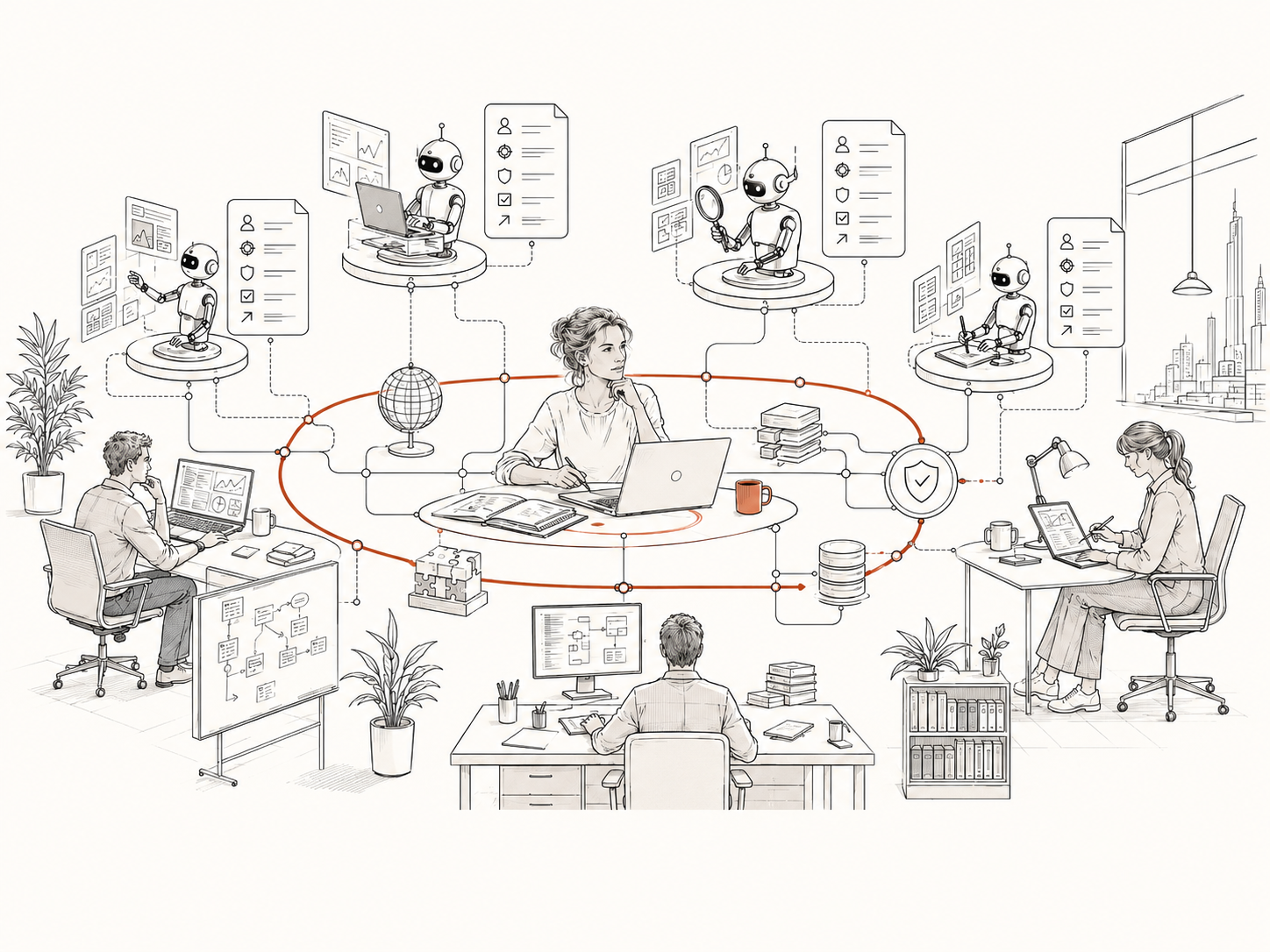
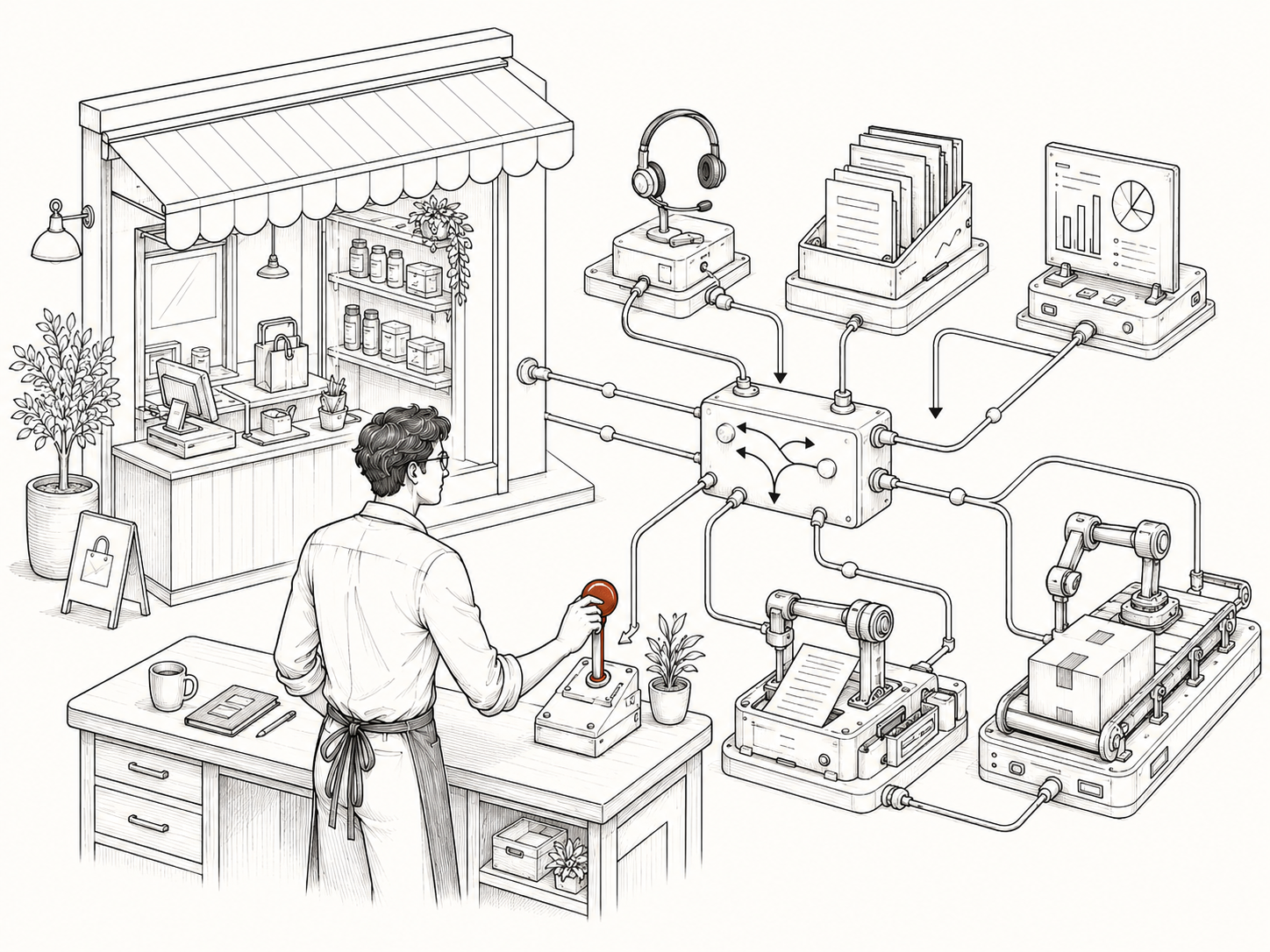
The chapter asks how people and agents can work as one manageable team, with clear rules for who acts, where the action stops, and who is responsible.
Agents become useful when they share a team operating system.
The chapter in four steps
01
The team has changed
Work now includes participants that act in steps, call tools, and leave a record.
02
The agent needs a contract
A defined role, inputs, permissions, checks, escalation path, and owner turn an agent from a toy into part of the process.
03
Coordination matters
Shared memory, rules, a stop rule, and an evidence trail matter more than the number of agents in the system.
04
The owner decides
Responsibility cannot be delegated to a model. The manager owns the outcome of the whole system.
From chaos to a team
Point
What to examine
What changes
No operating loop
Each agent has its own context, permissions, and guesses
Mistakes multiply while the human loses the full picture
With a contract
The agent has a task, boundary, escalation path, and metric
Its permissions and mandatory stop points are clear
With shared infrastructure
Common data, an action log, and controls
The team becomes a system that can be audited
What to take with you
Professional
Learn to assign work to an agent and verify the result, not just write prompts.
Manager
Define the agent contract before you scale. Otherwise, speed will turn into noise.
Founder
Build the shared operating loop first, then add agents.
Main point
An agent without a contract is not a team member. It is a source of random motion. The operating loop creates the team.
When Intelligence Became Cheap
Volume 2 · Chapter 4
A function can become autonomous. The whole company cannot.
The chapter asks how one person can run an entire function through agents without pretending the business no longer needs people or accountability.
A one-person company is not a company without people. It is a supervised function.
The chapter in four steps
01
The myth is louder
Stories about the one-person company easily turn into a fantasy of complete autopilot.
02
The function is real
One person working with agents can run marketing, analytics, support, or document operations.
03
The leverage is available
Code, media, and agents provide permissionless leverage. You can assemble serious capacity without building a separate department.
04
The costs remain
The person running the system still carries the operating loop, trust, customer relationships, and risk of burnout.
What is actually autonomous
Point
What to examine
What changes
Not autonomous
The whole company, trust, legal responsibility, and customer relationships
These stay with the person and the organization
Partly autonomous
A single function with repeatable steps and verification
This is where agents provide real leverage
Foundation
A harness, external memory, contracts, and stop rules
Without them, one person becomes the bottleneck
What to take with you
Professional
Build your own operating system and run a function instead of merely working faster.
Manager
Give agents functions that have an owner, a metric, and a verification loop.
Founder
Buy leverage deliberately. It amplifies your work but does not remove responsibility.
Main point
A one-person company works when the function is autonomous and the person still owns the boundaries, the customers, and the purpose.
When Intelligence Became Cheap
Volume 2 · Chapter 5
A small business does not need AI. It needs a customer problem solved.
The chapter asks which hole in the business an agent staff will close, who owns the operating loop, and where cheap capacity turns into an expensive dependency.
The staff is more affordable, but the owner still holds the wheel.
The chapter in four steps
01
Start with the hole
Do not start with "adopt AI." Start by preventing lost calls, leads, revenue, trust, or owner time.
02
Test the leverage
The idea should move new revenue, costs, or the customer experience. Otherwise, it is busywork with AI.
03
Choose the mode
A subscription gives you a tool. An assistant makes you faster. An autopilot sells a completed function within narrow boundaries.
04
Own the loop
Platforms provide capacity and charge a take rate. The agent helps, but a person must stop an expensive mistake.
A starting filter for small business
Point
What to examine
What changes
Pain point
Where revenue, leads, trust, or time leak today
Start here, not with a tool shortlist
Pilot
If touching the core feels risky, start with work you already outsource
A budget already exists and the internal process stays intact
Outcome
Easy work goes to the agent. Hard cases reach a person with context.
In retail: faster service, lower operating cost, and a better conversation
Rails
Payments, KYC, support, and marketplaces provide a ready-made staff
Do not give one channel control of both the customer and the data
What to take with you
Professional
Think like the owner of a function. What can you run as a team of you plus agents?
Manager
Before opening a role, ask whether a supervised agent can do the work and which value lever would move.
Founder
Choose one pain point, build the operating loop, and count your own time in the new cost base.
Main point
A small business no longer has to be large to have a staff. But a staff of agents is a drill. A person still chooses where the hole should go.
When Intelligence Became Cheap
Volume 2 · Chapter 6
When the customer is not human, a machine chooses you first
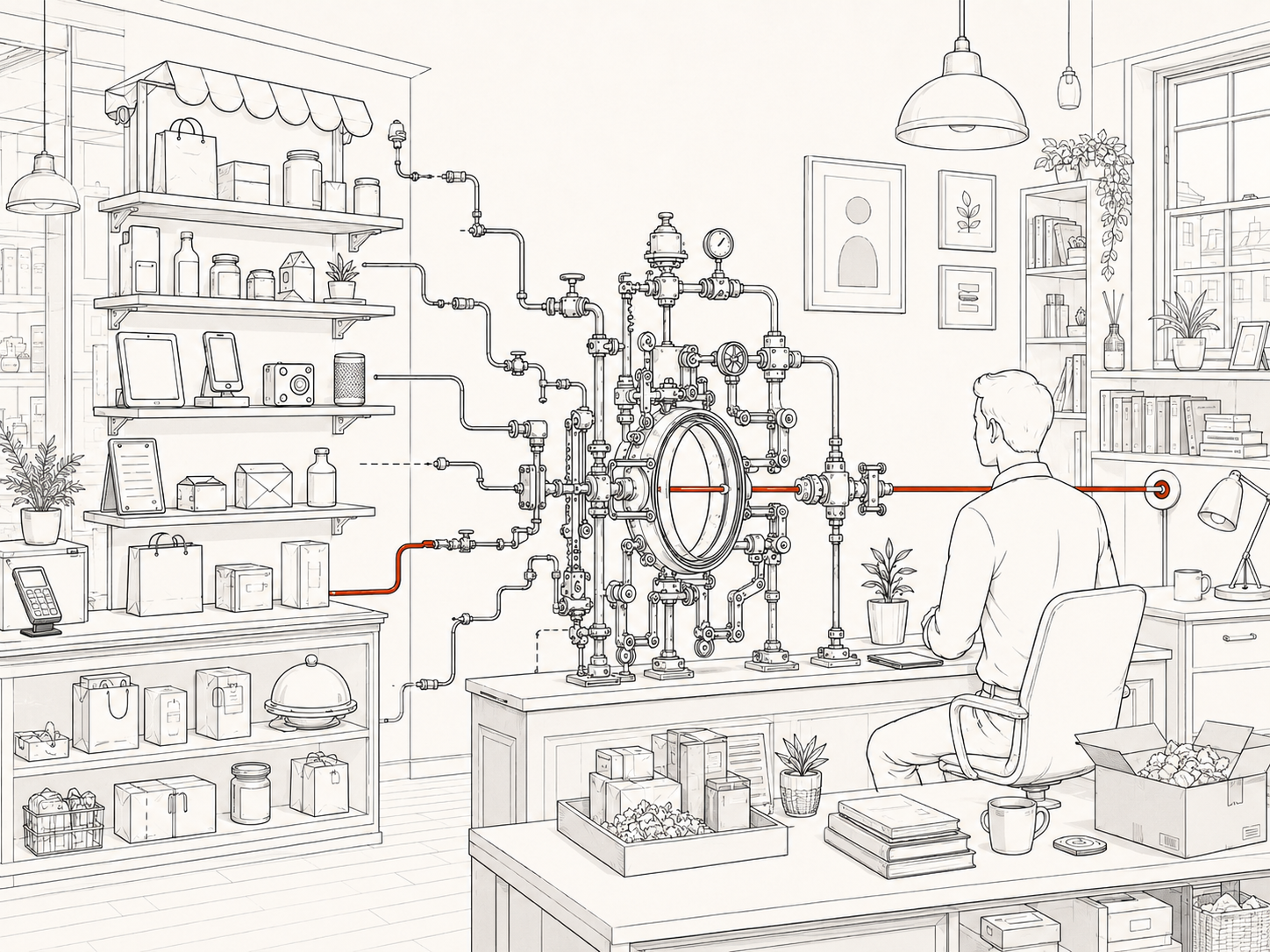
The chapter asks how to remain findable, understandable, and easy to buy when an agent searches, compares, and filters on the customer's behalf.
The customer's agent increasingly takes a seat in the decision room.
The chapter in four steps
01
Search became an answer
Customers increasingly ask an AI what to buy and arrive with a choice already made.
02
The agent controls entry
Ads, storefronts, and impulse have less power. The machine compares the job, price, risk, and evidence.
03
Marketing changes
The loudest brand does not win. The agent must be able to find it, understand it, and recommend it safely.
04
You need rails
When an agent buys and pays, authority, limits, identity checks, logs, and accountability all matter.
Check your visibility to agents
Test
What the machine will ask
What to fix first
Findability
Do AI answers and trusted sources include you for real customer queries?
Profiles, reviews, citations, and a clear description of the job you solve
Evaluability
Can the agent understand the price, terms, limits, availability, and evidence?
Remove vague claims, data trapped in images, and "ask a sales representative"
Actionability
Can it buy, enroll, or begin without a required conversation?
Provide clear steps, an API or form, payment, confirmation, and a log
Moat
What can the machine neither strip of identity nor reduce to a price?
Strengthen relationships, reputation, trust, and the human touch
What to take with you
Professional
Run a real customer query and see whether you appear in the AI answer and how the machine describes you.
Manager
Shift marketing from buying attention to providing data, evidence, and trusted sources that agents can read.
Founder
Check three things: can agents find you, understand you quickly, and buy from you without a conversation?
Main point
You used to persuade a person. Now a machine must choose you first. The door to the customer changes before the customer ever clicks "buy."
When Intelligence Became Cheap
Volume 2 · Chapter 7
The main risk for children is not the job. It is the place where they learn.
The chapter asks how to raise a person who uses cheap intelligence as a training partner, not as a substitute for their own thinking, taste, and responsibility.
Skill grows when the child does the work, not when the assignment is merely submitted.
The chapter in four steps
01
The entry step shrinks
AI does not take an entire profession at once. It takes the bottom rung where beginners used to grow beside experienced people.
02
Friction is necessary
Mastery needs challenge, difficulty, and connection. A "do it for me" button weakens all of them.
03
The debt starts early
An adult delegates a skill they already have. A child delegates a skill that has not developed yet.
04
You can build new rungs
Real projects, a present mentor, evidence of completed work, and the role of agent boss restore a place to grow.
Rules for AI at home
If AI...
What the child gets
How to turn it into practice
Writes for them
A quick submission without practice in writing or thinking
Have it check the outline, ask questions, and point out weak spots
Solves the problem
An answer without the experience of finding the path
Ask for a hint, the next step, or a check question, but not the solution
Builds the project
Polished output with no authorship
The child sets the goal, makes choices, edits the work, and defends it under their own name
Always agrees
Easy companionship without the friction of a real relationship
Use AI to rehearse a conversation, not to replace the person beside them
What to take with you
Parent
Look past the job title to the place where growth happens. Where does the child think, choose, make mistakes, and do the work?
Manager
If junior tasks disappear, future senior professionals cannot grow. Build learning rungs inside the team.
Founder
Demand for workshops, mentorship, projects with real stakes, and "hands plus AI" will grow faster than the school system can adapt.
Main point
We cannot choose a profession for our children. We can preserve places where they do the work themselves, ask questions, check quality, and answer for the result.
When Intelligence Became Cheap
Volume 2 · Chapter 8
The ladder did not disappear. It has a new owner.
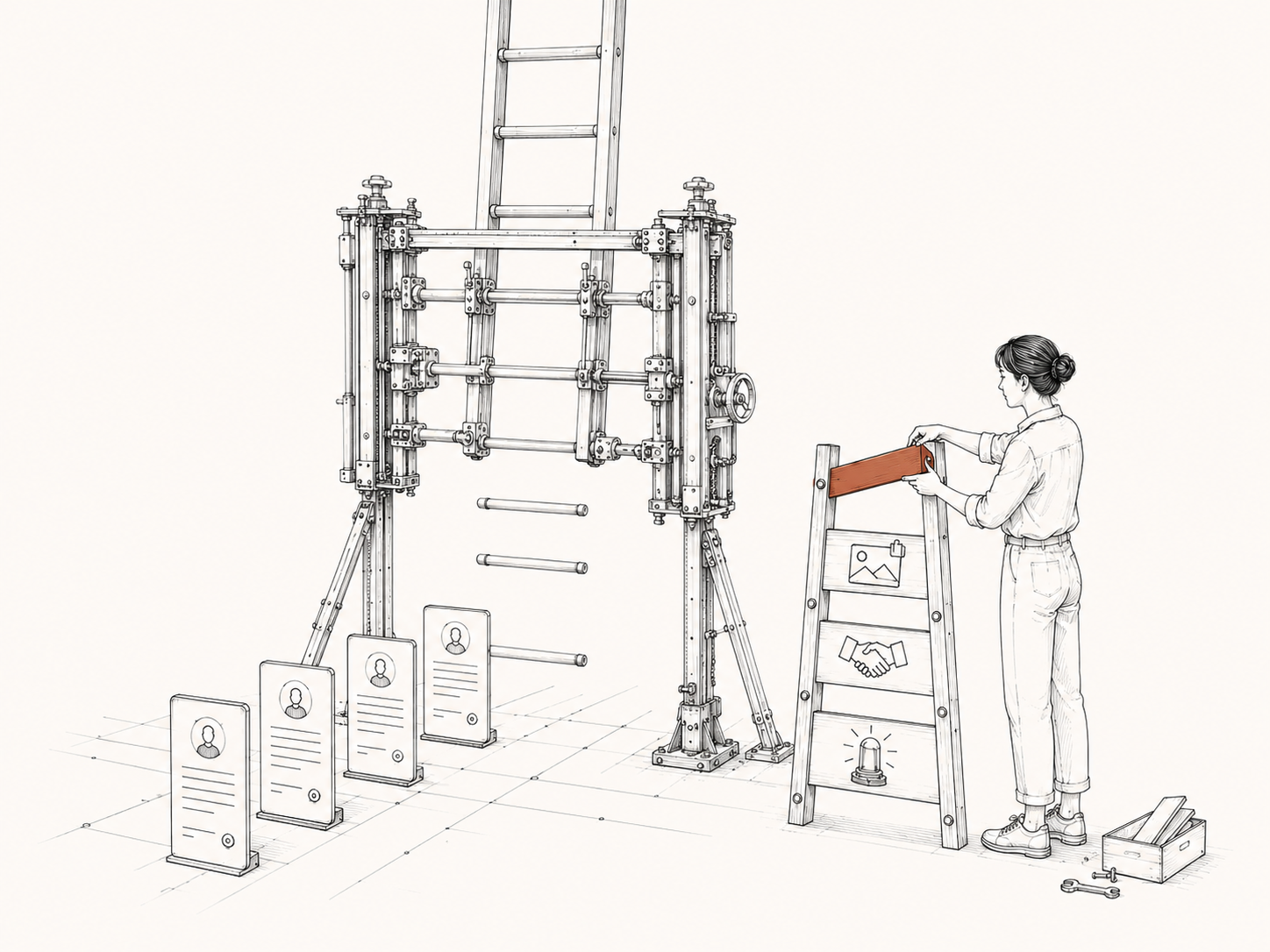
The chapter asks how to keep bargaining power when entry into a profession narrows and a platform increasingly owns your visibility, reputation, and rules.
The old ladder is not coming back. You will have to build your own beside the platforms.
The chapter in four steps
01
Entry has narrowed
Work does not vanish, but the lower rungs shrink. Younger workers are filtered out earlier, and fewer entry-level tasks remain.
02
The benefit arrives late
Engels' pause is a reminder: technology grows productive quickly, while worker pay often catches up later.
03
The platform owns the ladder
It decides whom to show, how to calculate ratings, and which rules will control access to work tomorrow.
04
You can build your own ladder
Bargaining power grows from outcomes, direct relationships, and a reputation you can take with you.
What changed
Career foundation
Old ladder
New reality
Right to enter
A degree, internship, or junior role
A portfolio of outcomes and evidence of real work
Visibility
A person reads your resume
A filter may stop you before a recruiter sees you
Reputation
A reference or a name inside one company
Your rating is often locked inside a platform
Rules for growth
Known to everyone and slow to change
The platform owner changes them alone
What to take with you
Professional
Check your dependence on platforms. If access closes tomorrow, what remains besides your resume?
Manager
A narrow entry path creates a shortage of midlevel talent later. Build learning rungs inside the team.
Founder
Own your channel and your customer trust. A rating in someone else's results is worth less than distribution you control.
Main point
Use other people's platforms, but do not confuse access with ownership. A career is more resilient when the outcomes, relationships, and name belong to you.
When Intelligence Became Cheap
Volume 2 · Chapter 9
Intelligence became cheaper. The rails beneath it became more expensive.
The chapter asks who owns the physical and platform infrastructure behind cheap intelligence, and what will remain yours if the price or access changes.
You do not have to own the railroad. You do need to know whose tracks you use.
The chapter in four steps
01
Atoms cost more than bits
A model answers in seconds, but value still depends on roads, warehouses, electricity, people, and hardware.
02
Jevons is back
As each request gets cheaper, it makes sense to give AI more tasks. The total compute bill rises.
03
Skilled hands have an edge
Data centers need electricians, installers, and technicians. The shortage has moved from intelligence to the physical world.
04
Someone owns the rails
You do not own the chips, energy, clouds, marketplaces, or APIs. Their owners charge rent for the ride.
The rails ladder
Position
How to recognize it
Move up
Owns a node
You have customers, data, trust, or expertise that others pay to access.
Deepen the moat through context, accountability, and direct relationships.
Builds deliberately
You pay rent but know the amount, keep a backup route, and own an asset of your own.
Move one asset from rented to owned each year.
Pays without looking
You do not know how much revenue goes to platforms or what you would do after a price increase.
List every toll and add them into one number.
What to take with you
Professional
Identify the platforms between you and the value. Strengthen what you can carry to any set of rails.
Manager
Recalculate the process with compute at three times the price. Keep a second route for models, data, and prompts.
Founder
Calculate platform rent as a share of revenue. Do not let one AI provider become the only gateway to your cost base.
Main point
Use the large platforms, but keep a map of alternate routes: portable data, several providers, open models, and a value node of your own.
When Intelligence Became Cheap
Volume 2 · Chapter 10
Do not guess the future. Test it with scenarios.
The chapter asks which world is already emerging in your industry and which moves will hold up across all four possible futures.
A forecast bets on one line. Scenarios give you a map of the junctions.
Four worlds in 2030
01
The platform world
Benefits concentrate, but people still command a price. Customers, work, and audiences arrive through gates owned by others.
02
The divided world
Benefits gather at the top while the middle loses value. Career rungs shrink, and the public response becomes the main force.
03
The multiplier world
AI amplifies people. The machine prepares, calculates, and drafts. The person chooses, verifies, and takes responsibility.
04
The human premium world
An abundance of generated work raises the price of the human touch. Trust, presence, a signature, and care become the product.
Test your industry
What to watch
What growth looks like
First move
Platform dependence
The share of sales, hiring, or demand that comes through algorithmic intermediaries
Maintain a direct channel and combine all platform rent into one number.
Entry into the profession
Beginners find it harder to get their first real tasks and make useful mistakes
Build practice rungs and a reputation people can carry elsewhere.
Human premium
Customers pay more for personal involvement, trust, and a human signature
Strengthen your name, relationships, and willingness to take responsibility.
What to take with you
Professional
Find your place on the indicator panel and build a portfolio of outcomes, customers, reputation, trust, and a backup route.
Manager
Your AI metric is a vote for a scenario. Measure the growth in outcome per person, not only the roles removed.
Founder
Move at least one asset from rented to owned: a channel, customer list, brand, data, or customer trust.
Main point
Betting on one forecast makes you hostage to one scenario. A portfolio of no-regret moves will not pay equally in every world, but you need it in all of them.
When Intelligence Became Cheap
Volume 2 · Chapter 11
A plan without a compass quickly becomes a ritual
The chapter asks where an AI agent is actually useful, how to estimate the effect in advance, and which gate you must pass before expanding the change.
The compass does not promise a date. It shows what is ready and what is still blocking the route.
Four directions
01
Where
Do not automate chaos. Start with work you can describe, repeat, and verify.
02
People
Learning belongs next to the operating loop. People learn on real tasks, not in a course taken to check a box.
03
Effect
Record the baseline first. Measure the time, cost, and rework across the full cycle.
04
Control
Responsibility cannot be delegated. The agent has an owner, boundaries, a log, and an emergency stop.
Score the process
Question
A good candidate
When "no" helps
Does it repeat?
A stream of similar requests, documents, or decisions returns every week.
A rare expert task is better left to a person.
Is there enough volume?
There are enough cases to show the savings and keep training grounded in real work.
Low frequency will not pay for the verification loop.
Can you verify it?
You know what a correct result looks like and who confirms the quality.
Without verification, the agent will only make the mistake faster.
Can you tolerate an error?
You can stop and fix a failure before it reaches the customer without human review.
High risk requires a narrow role and a human decision.
Does the context exist?
Instructions, the knowledge base, data, rules, and history are available to the system.
If context lives in people's heads, collect it first.
Seven gates
Gate 1
The process was chosen for a reason, not because it is fashionable.
Gate 2
A baseline metric exists.
Gate 3
A human owner has been named.
Gate 4
An error is visible and can be stopped.
Gate 5
People learn through live work.
Gate 6
Context is not lost across a zoo of services.
Gate 7
You know what to expand and what to close.
What to take with you
Professional
Notice where your work owns the outcome and where the agent only prepares a draft.
Manager
Start with one process, one owner, one metric, and one failure you are prepared to accept.
Founder
Test the outside loop. Can other people's agents find, understand, and choose your product without a human salesperson?
Main point
Half the processes should receive a "no" after scoring. That saves attention, money, and trust.
When Intelligence Became Cheap
Volume 2 · Epilogue
The engine became cheaper. Holding the wheel is still expensive.
The epilogue closes both volumes. AI has made answers, drafts, and action cheaper, but it has not answered where to go or removed the name of the person responsible for the turn.
Final vignette: a road to the horizon. An ornament, not a new diagram.
How the book's arc closes
01
Answers
Production gets cheaper. Writing, calculating, searching, and assembling drafts have become easier and faster.
02
Direction
The harbor does not appear by itself. Even the best engine cannot tell you why the trip is worth taking.
03
Responsibility
The navigator is not accountable. A model can suggest a turn, but the review will still come back to a person.
04
The wheel
Judgment is the final scarce resource. Choice, verification, and the willingness to carry the consequences did not become cheap.
The same note rises through every level: what can be done gets cheaper, while the reason for doing it grows more valuable.
What to take from the epilogue
Professional
AI can make the draft. Your value lies in knowing which draft is right and what you are willing to stand behind.
Manager
A team with agents depends on the person who sees the goal, verifies the outcome, and accepts the review.
Founder
A company wins through the machine built around the engine: the process, destination, customer, metric, and control.
Final line
A model can suggest a route. But you learn to hold the wheel when letting go feels easiest only by staying in the driver's seat.
When Intelligence Became Cheap
Volume 2 · Appendix
Do not wait for AGI as a date. Test it as a task.
The appendix addresses the most direct fear: "Will AI replace us?" The book does not offer reassurance. It changes the question from an AGI label to the task, the cost of error, control, and the human outcome.
How the argument works
01
Turing
Replace a bad question with a workable one. "Can a machine think?" gives way to a testable game.
02
AlphaGo
The fear becomes physical. The machine makes a move that a master would not have found alone.
03
PNAS
Defeat does not end growth. Go players began playing stronger and more novel moves alongside a superhuman machine.
04
Work
This is no longer a board game. Business has messy data, people, a cost of error, and responsibility.
What AGI means in this book
Dimension
Strong models today
AGI as a hypothesis
Breadth
Many classes of tasks, with failures and blind spots.
Broad transfer across unfamiliar tasks.
Reliability
Superhuman in places, unstable at the edges.
Consistent performance at the level of a strong human across a broad class of tasks.
Autonomy
A short horizon under rules and review.
Long chains of action inside broad boundaries.
Verification
Without an operating loop, it can make mistakes with confidence.
It still requires authorization, a known cost of error, and accountability.
Five questions instead of one
Question 1
What task does it solve?
Do not ask how smart it is. Ask what it does and where that work sits on your task list.
Question 2
What does an error cost?
An email draft and a customer payment belong to different worlds of risk.
Question 3
Is it reliable at the edges?
Test it on messy data, exceptions, and the details of your work, not only in a demo.
Question 4
Who controls the action?
Find the action trail, the stop rule, and the name signed under the result.
Question 5
What does it strengthen in a person?
A tool can strengthen judgment or weaken the habit of checking long before AGI arrives.
Main point
AI is not simply replacing us. Each year, it asks a harder question: what exactly are you useful for?