A shorter version of the book, built from one-page chapter summaries. Each page gives you the main idea, the reasoning, a practical framework, and the takeaway.
This does not replace the full manuscript. The stories, evidence, caveats, and author's voice remain in the chapters. Use this file for a quick start, a refresher, or an editorial check of the book's logic.
From the author. When intelligence became cheap
Part I. What happened and why the price of work is changing
Chapter 1. How we got here, and what intelligence costs
Chapter 2. The new price of intelligence: what gets cheaper and what gets more valuable
Chapter 3. Professions do not disappear. They break into tasks
Chapter 4. The career ladder is breaking at the bottom and in the middle
Part II. How to stay useful
Chapter 5. Five levels of new usefulness
Chapter 6. You as a system
Chapter 7. Skills that gain value
Chapter 8. Cognitive debt: use AI without losing the ability to think
Chapter 9. A personal audit of your profession
Chapter 10. Who am I when AI does my work?
Chapter 11. Your first 90 days
Volume 1 epilogue. From yourself to the world around you
When Intelligence Became Cheap
Introduction | From the author. When intelligence became cheap
You used to be paid for what you made. Now you are paid for what changed
AI made knowledge work cheap. The person who owns the outcome, and answers for it, became more valuable.
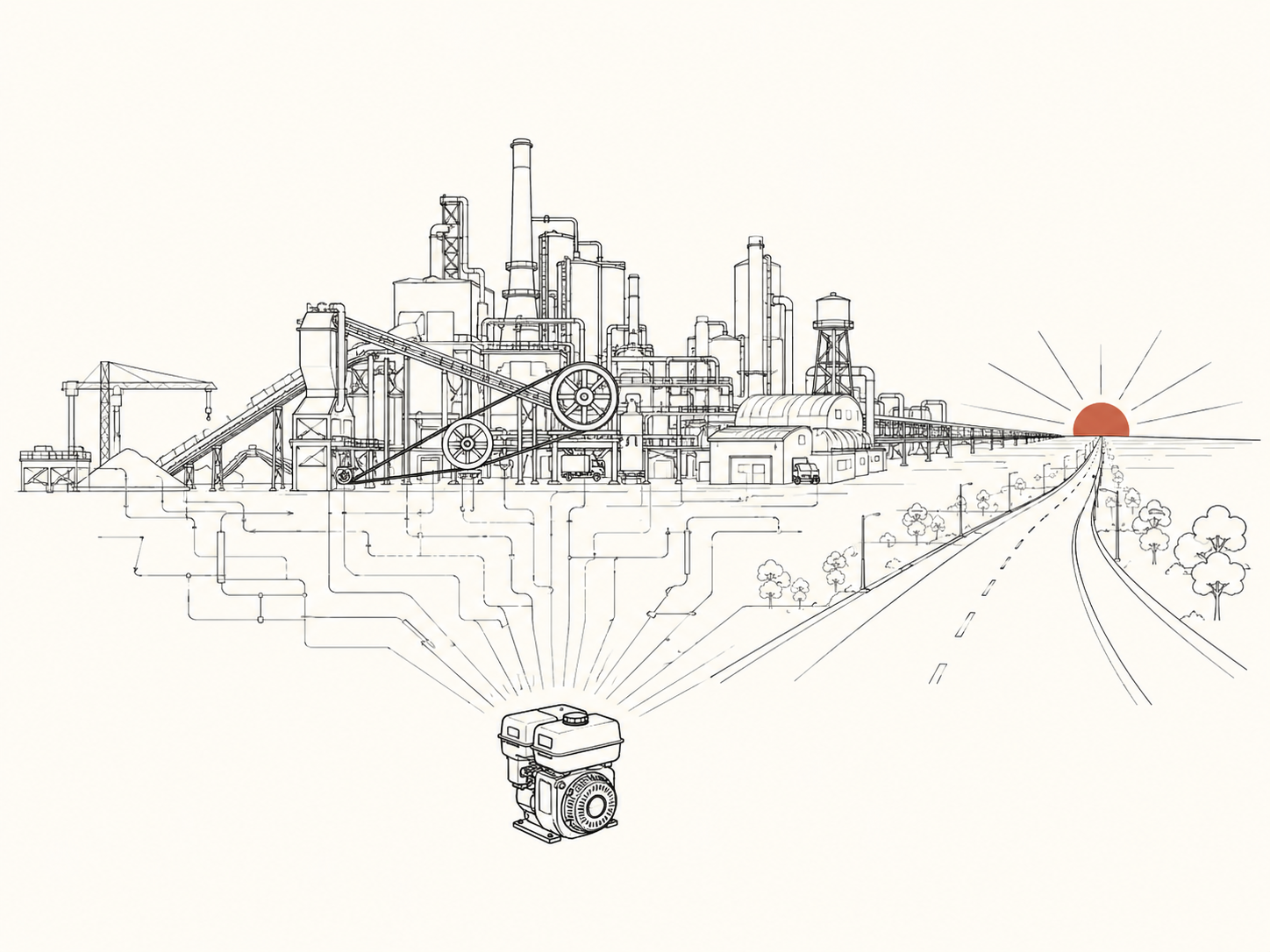
Many people have a cheap engine. Someone still has to build the car.
The chapter in four steps
01
What happened
Machines have taken over physical labor for a long time, pushing people "up" into knowledge work. Now that work is being automated too. For the first time, the pressure is not limited to one industry. It reaches almost every profession at once.
02
This is already real
The people building AI say so openly. You can also see it in everyday work: a contract, report, or presentation can come together in minutes. That is why everyone will need to learn how to work with AI.
03
But it is not magic
AI can solve a hard problem and miss an easy one. It can invent facts with complete confidence. A striking demo is a long way from reliable work. Human effort fills the gap between "AI can do it" and "we can rely on it."
04
The good news
95% of people will use AI at the surface level: ask, get an answer, copy. It is easier now than in any earlier shift to join the 5% who use it systematically. Try again, add context, check the work, and keep going.
Where value sits now
The economics have not changed: a business pays for one of two things. You either win and keep customers, which drives revenue, or achieve the same result at lower cost. AI made production cheaper, so human value moved to the places where the machine falls short. Experience now protects four moats:
1
Verification
Catch an AI error before it becomes expensive. A lawyer spots the risk in a "flawless" contract. A doctor sees it in a scan.
2
Tacit knowledge
You learned it through practice, and it does not appear in any text. That means it is missing from the model's training data too.
3
Taste
When anyone can make something, the ability to tell truly good work from polished work gains value.
4
Relationships
Trust brings customers back and helps them forgive mistakes. AI can write an email, but it cannot build that trust.
Who this book is for and what you get
Specialist
See what became cheaper in your work, what commands a higher price, and where to grow: framing tasks, verifying output, developing taste, and owning outcomes.
Manager
See why your team produces more documents but no more results. Decide where quality checks belong and who owns the decision.
Founder
Find what wins customers, cuts costs, or builds trust. Everything else is activity in attractive packaging.
Main takeaway
Answers get cheaper, so responsibility for the question becomes more valuable. Many people have a cheap engine. Building a working car around it is still a human job.
When Intelligence Became Cheap
Part I | Chapter 1 | How we got here, and what intelligence costs
The outcome did not get cheaper. The first step did. You still have to build the outcome
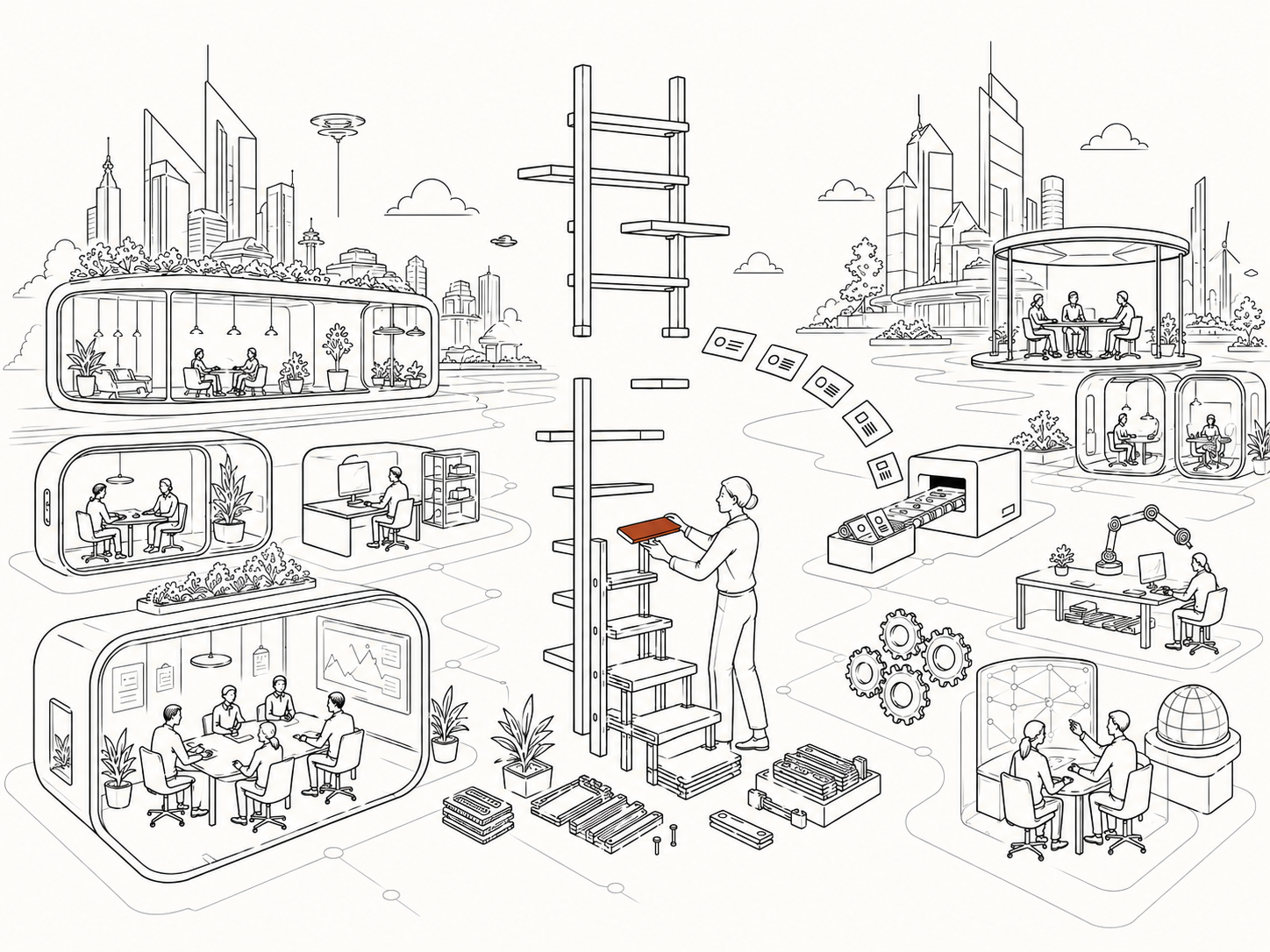
Cheap intelligence lowers the cost of the first step. A valuable outcome needs a system. The model is the engine, but the whole car has to run.
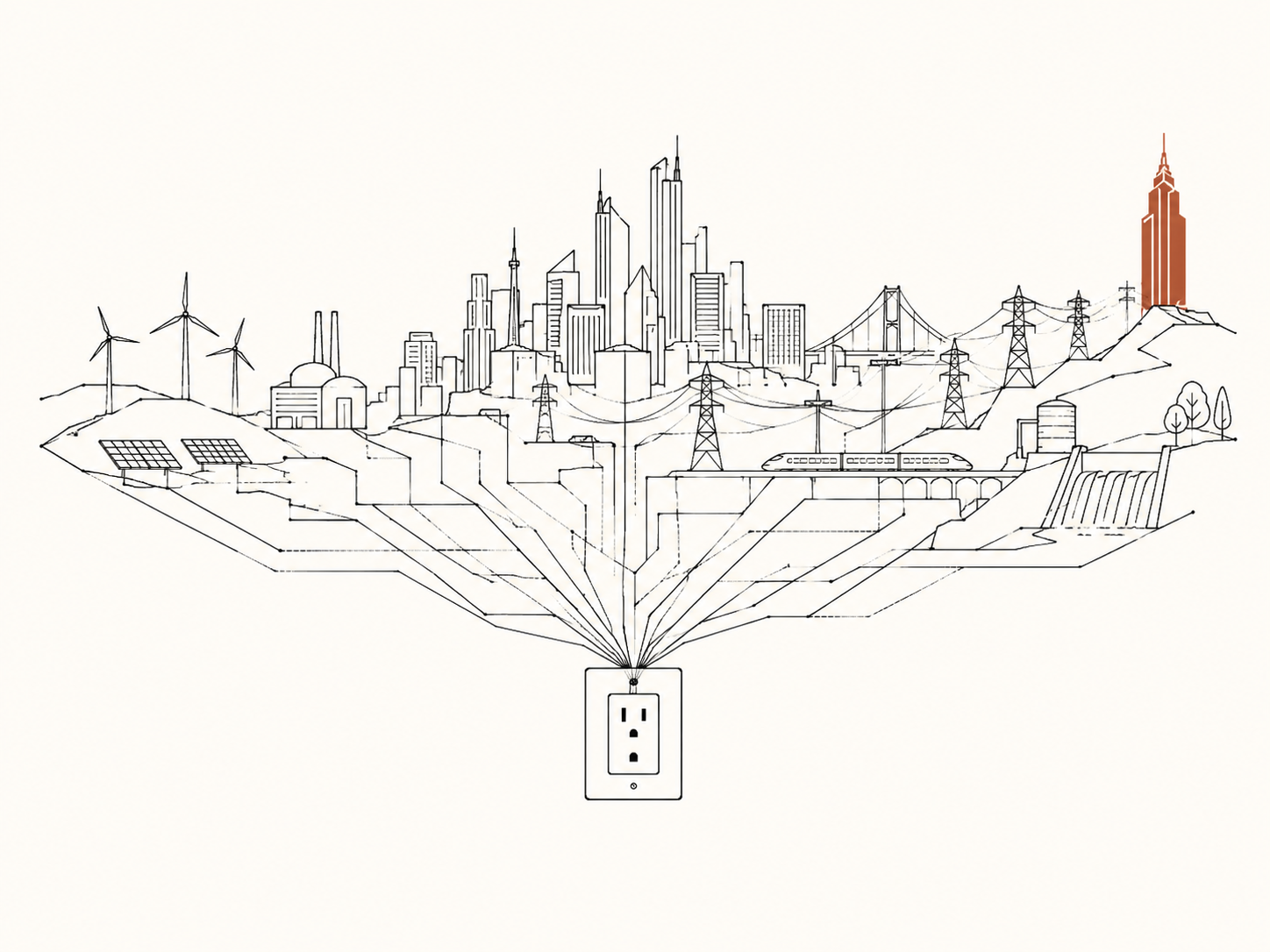
The outlet is here. What kind of city will you build around it?
The chapter in four steps
01
From chats to agents
Mass adoption did not begin with architecture. It began with language: ask in plain words and get an answer. AI then moved inside workflows and on to agents that do more than answer: goal -> plan -> tools -> verification.
02
The first step got cheaper
The price of a unit of model work, a "token," falls severalfold each year. Cheap attempts change behavior: people ask more often and try bolder ideas. But the draft gets cheaper, not the right decision.
03
The scale paradox
A cheap unit creates new demand. An agent spends tokens in long sequences, often many times more than a chat. At scale, intelligence is not free. Data, verification, control, and the cost of mistakes all become more expensive.
04
Value moves to outcomes
Output, what was produced, is cheap and often has no owner. An outcome, what changed, needs context, verification, and accountability. That is what people pay for now.
What got cheaper and what stayed expensive
Test your own work: work changes one layer at a time, not one profession at a time. One layer gets cheaper while another gains value. Ask about each layer: what can AI already do here, and what are people still paying me to do?
Work layer
What gets cheaper
What stays expensive
First answer
Draft, plan, explanation, list of options
Framing the right problem
Analysis
Summary, comparison, initial hypothesis
Context, source quality, and a test criterion
Production
Text, presentation, code, script
Verification, accountability, and implementation
Process
One isolated operation
Connecting data, tools, and controls
Outcome
The appearance of completed work
A change in the real world
What each audience takes away
Specialist
The entry point to your work got cheaper, not the outcome. Value sits higher in the stack: framing the task, checking the work, choosing sources, and owning the outcome.
Manager
A quick pilot is not the same as scale. Intelligence is not free at scale. Count the cost of mistakes, verification, and data, not just the price of an answer.
Founder
A cheap assistant is not a team in a subscription. Your advantage comes from process, data, distribution, and customer trust, not access to the model.
Main takeaway
Electricity became infrastructure. The power itself did not create the value; what people built around it did. Intelligence is similar. The outlet is here. What will you build around it?
When Intelligence Became Cheap
Part I | Chapter 2 | The new price of intelligence
Everyone has efficiency now, so it no longer sets you apart. People pay for what others cannot do and for someone they trust
Value comes down to three levers: new revenue, savings, and attention with trust. AI drove down costs for everyone at once. What remains is magic and trust.
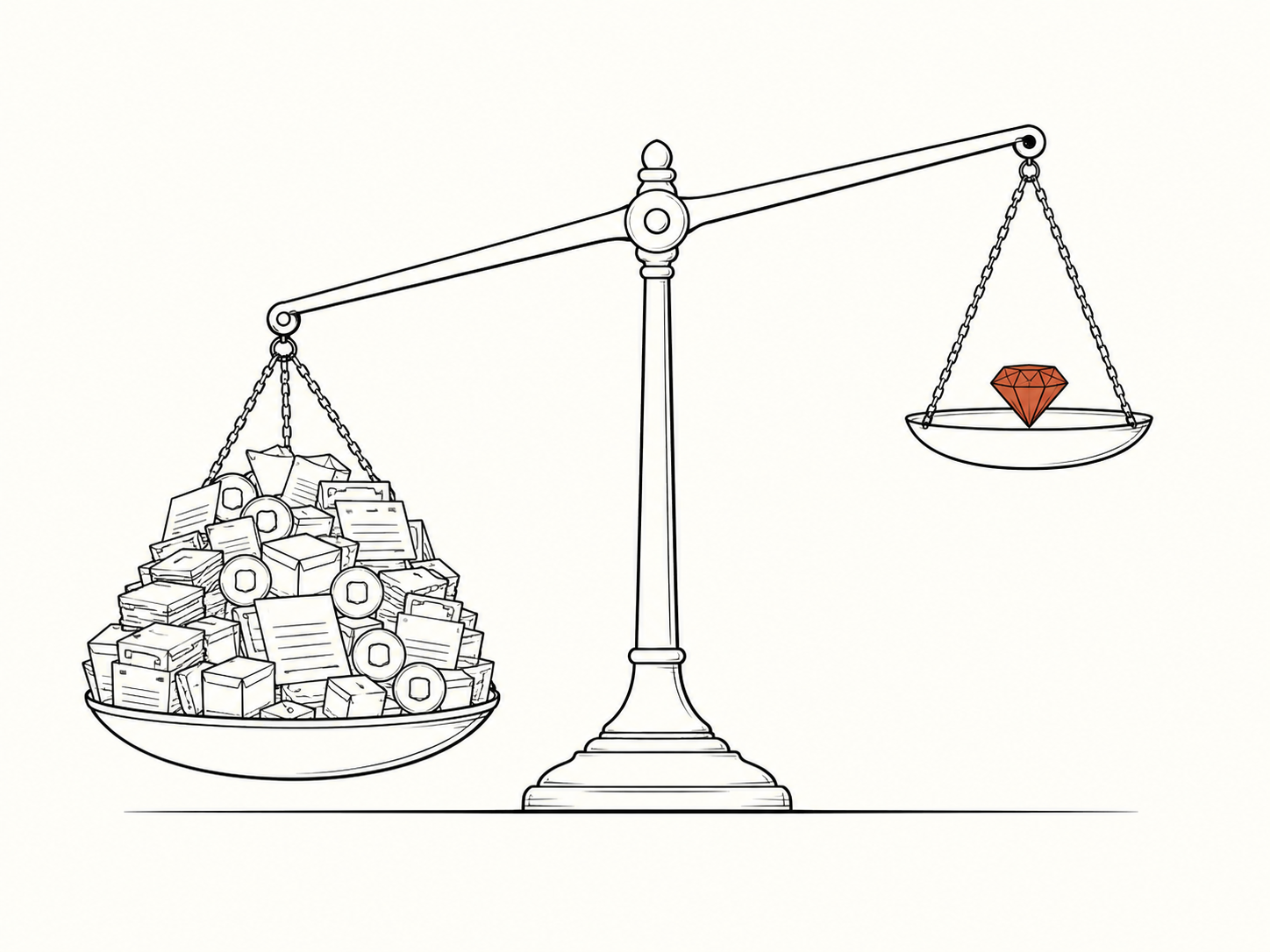
Cheap output is abundant. Scarce things carry value.
The chapter in four steps
01
Three levers
Value is created in only three ways: new revenue, or magic; savings, or lower costs; and attention with trust. Everything else supports one of them.
02
AI crushed the cost advantage
Standard output got cheaper, but for everyone at once. An advantage that everyone has stops being an advantage. Efficiency becomes basic hygiene.
03
Scarcity gains value
Two levers remain: magic, meaning something others cannot do that gives you pricing power, and attention with trust, meaning people believe you and you can reach them. Content is abundant. Trust is scarce.
04
The model is not the moat
Everyone has the same cheap engine. Value moved into data, context, trust, distribution, and ownership of the outcome.
What gets cheaper and what gains value
Test your own work: does what you do bring in new revenue, create savings, or win and keep a customer? If it does none of these, it is activity, not value.
Gets cheaper (basic hygiene)
Gains value (advantage)
Standard output: draft, summary, code
Magic: what others cannot do
Production speed and volume
Judgment and accountability for the outcome
"Do the same thing as everyone else, only cheaper"
Pricing power: customers pay more for you
Access to the model itself
Data, context, and the surrounding system
One more similar product or piece of content
Attention, distribution, and trust
What each audience takes away
Specialist
Everyone has speed and volume now. Your value lies in what is hard to copy, such as judgment, taste, and expertise, plus the trust you earn through reputation, audience, and visible results.
Manager
Do not judge an AI project only by hours saved. Competitors will get those savings too. Use all three levers, and build your moat in data, process, and trust rather than the model.
Founder
Lower costs are the entry ticket, not a distinction. Your advantage is magic, a product others do not have, plus distribution that carries trust through your channel and audience.
Main takeaway
Answers get cheaper. The right question gains value. Everyone has efficiency now, so people pay for what others cannot do and for someone they trust.
When Intelligence Became Cheap
Part I | Chapter 3 | Professions break into tasks
AI does not take an entire profession. It changes individual tasks, and raises the value of people where judgment and trust matter
A profession is a bundle of tasks. Some move to the machine. People do others with AI. A third group stays human and gains value.
Ignore the job title for a moment. Look at what happens to the tasks inside it.
The chapter in four steps
01
Tasks, not professions
The ATM did not eliminate the bank teller. It took routine transactions and rebuilt the role around conversation, difficult cases, sales, and trust.
02
The boundary is uneven
AI is already strong at many work tasks, but not evenly. A structured artifact is easier than long context, risk, and accountability.
03
Exposure is not replacement
High exposure means the work will change. Yet demand can grow, and a cheaper task can sometimes create more work, not less.
04
Shift your weight
If you stay with tasks that are getting cheaper, your work gets cheaper with them. Move your time toward judgment and trust, and your work gains value.
Three task buckets
This week's test: sort 10 to 15 real tasks into three buckets. Do not count job titles. Count the time and responsibility inside each task.
Bucket
What belongs there
What the person should do
AI alone
Draft, summary, template, search for options
Automate it, but do not base your value on it
Human + AI
Analysis with context, a verified document, preparation for a decision
Set criteria, check sources, and catch risk
Human only
Judgment under risk, conflict, trust, sign-off
Move more time and responsibility here
What each audience takes away
Specialist
Break your week into tasks and calculate the share that AI can do alone. Over six months, add two or three tasks from the third bucket: judgment, risk, and trust.
Manager
Rebuild roles around tasks, not titles. First see what became cheaper and what new capacity it creates. Then make staffing decisions.
Founder
Watch which tasks become cheaper for competitors and customers. Entry barriers fall there, demand changes, and new openings for products appear.
Main takeaway
The machine does not come for a profession. It comes for tasks. Stop asking, "Will it replace me?" Ask, "Which of my tasks already got cheaper, and what will I do with the time that opened up?"
When Intelligence Became Cheap
Part I | Chapter 4 | The career ladder is breaking
AI is knocking out the lower and middle rungs of the career ladder. The new ladder needs proof, ownership, and apprenticeship
The problem is not simply that machines will take work. The problem is that there may be no way up if you wait for someone else to fix the ladder.
The old ladder belonged to the company. More often, you have to build the new one yourself.
The chapter in four steps
01
One mechanism
AI helps beginners the most while also reducing entry-level hiring. Companies stop paying for early experience when they can plug it in as a service.
02
The entry point breaks
The tasks that once trained a beginner, such as drafts, research, summaries, and checks, overlap with the "AI alone" bucket. When those tasks disappear, apprenticeship breaks too.
03
The middle gets thinner
Middle layers collect, summarize, and supervise other people's work. That is structured digital output, an ideal area for AI agents.
04
Someone must build the ladder
Companies have a rational reason to cut entry and middle layers. Yet they still need experts. That means we must design the path to expertise ourselves.
Map of the broken ladder
Chapter test: find your section of the ladder, entry, middle, or top, and choose one move for the next 90 days.
Section
What is breaking
What to do
Entry
The simple tasks people used to learn on are disappearing
Build proof of results instead of waiting to accumulate tenure
Middle
Relay work gets cheaper: status updates, summaries, oversight
Move from relaying information to owning the decision
Top
AI prepares the analysis but does not take responsibility
Design apprenticeships and develop future experts
What each audience takes away
Specialist
Answer three questions: what am I learning on, what do I own, and what do I merely pass along? At the entry level, you need a portfolio and a visible trail of completed work.
Manager
AI agents can reduce relay work, but someone still has to own decisions. Ask the five-year question: who will become your senior expert?
Founder
A flat company moves faster but removes the floors where people train. Decide early who you will develop and how you will do it.
Main takeaway
The old ladder belonged to the company. The new one belongs to you, and its rungs have different names: what you can carry through to a result, what you will answer for, and who trusts you.
When Intelligence Became Cheap
Part II | Chapter 5 | Five levels of new usefulness
AI makes execution cheaper. People earn more where work needs verification, process, risk ownership, and a system
The question is not, "Can I use AI?" Ask the harder one: what am I paid for in this task? Is it the file, the check, the working process, the risk I accept, or the system?
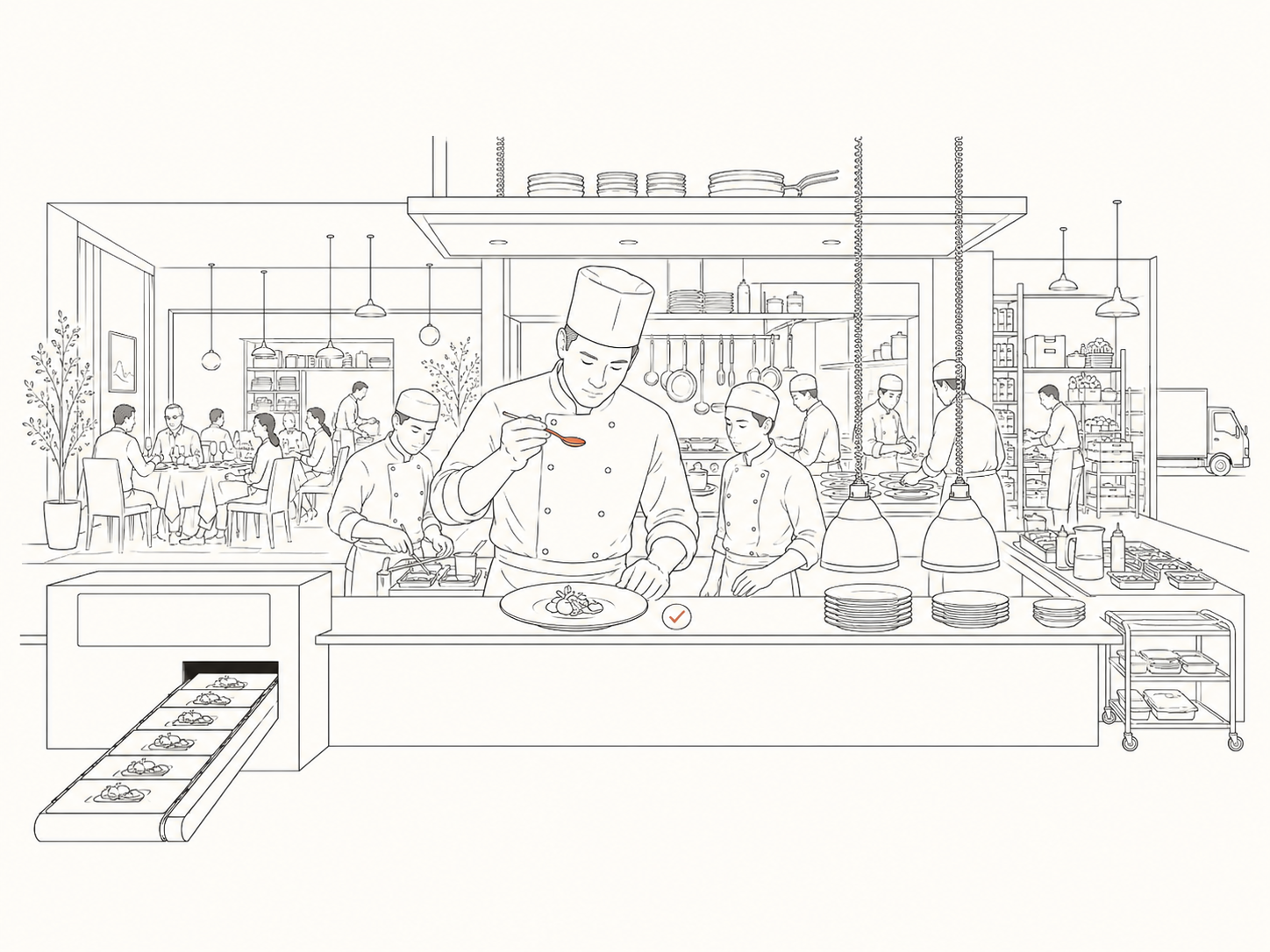
A kitchen shows the whole ladder: execution, verification, process, accountability, and the system.
The chapter in four steps
01
The same tool
In a BCG experiment, the same AI improved the work of some consultants and hurt the work of others. Access was not the difference. The difference was the human role beside the tool.
02
The first level
"I can use AI with confidence" quickly becomes basic hygiene. The nearby trap is self-automation: handing over the whole task and no longer growing.
03
Verification
When output gets cheaper, the ability to separate correct from plausible gains value. That takes criteria, trained judgment, and accountability.
04
The system
Level five is not a CEO title. It is the habit of packaging a solved problem so the solution works without you.
The usefulness ladder
Level
What people pay for
What AI does
First move up
0. Executor
"did what I was told"
already does it alone
give machine work to the machine, then verify it
1. AI user
speed of execution
levels the field
stop submitting unchecked work
2. Validator
judgment about quality
imitates judgment but takes no responsibility
build a verification process
3. Orchestrator
a working process
becomes an executor inside the loop
take ownership of the outcome
4. Outcome owner
the outcome and the accepted risk
prepares options
turn the solution into a system
5. System builder
a system that runs without daily involvement
becomes material inside the system
build the next system
What each audience takes away
Specialist
Take your latest AI-assisted result and answer four questions: what was the outcome, what decision did you make, what error was unacceptable, and what context did you add?
Manager
View the team through these levels. Who verifies, who builds the process, who owns the risk, and who only forwards output?
Founder
Buy levels, not hours. Agents cover level zero. Verification, process, accountability, and the system remain expensive.
Main takeaway
The level belongs to the task, not the person. Make one honest move each quarter: choose one task and raise it by one level.
When Intelligence Became Cheap
Part II | Chapter 6 | You as a system
The same model does not make people equally capable. The difference comes from the system around the work
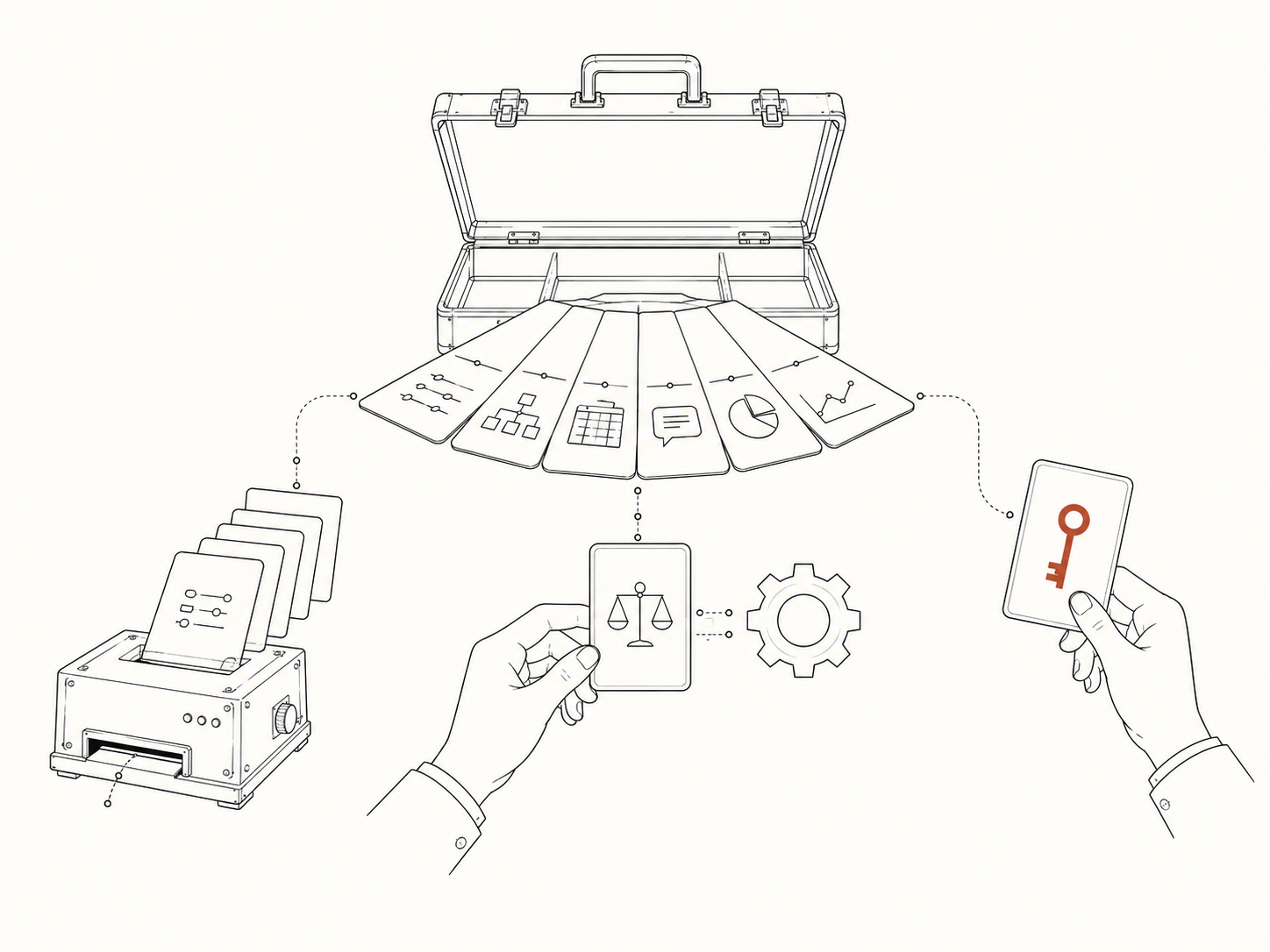
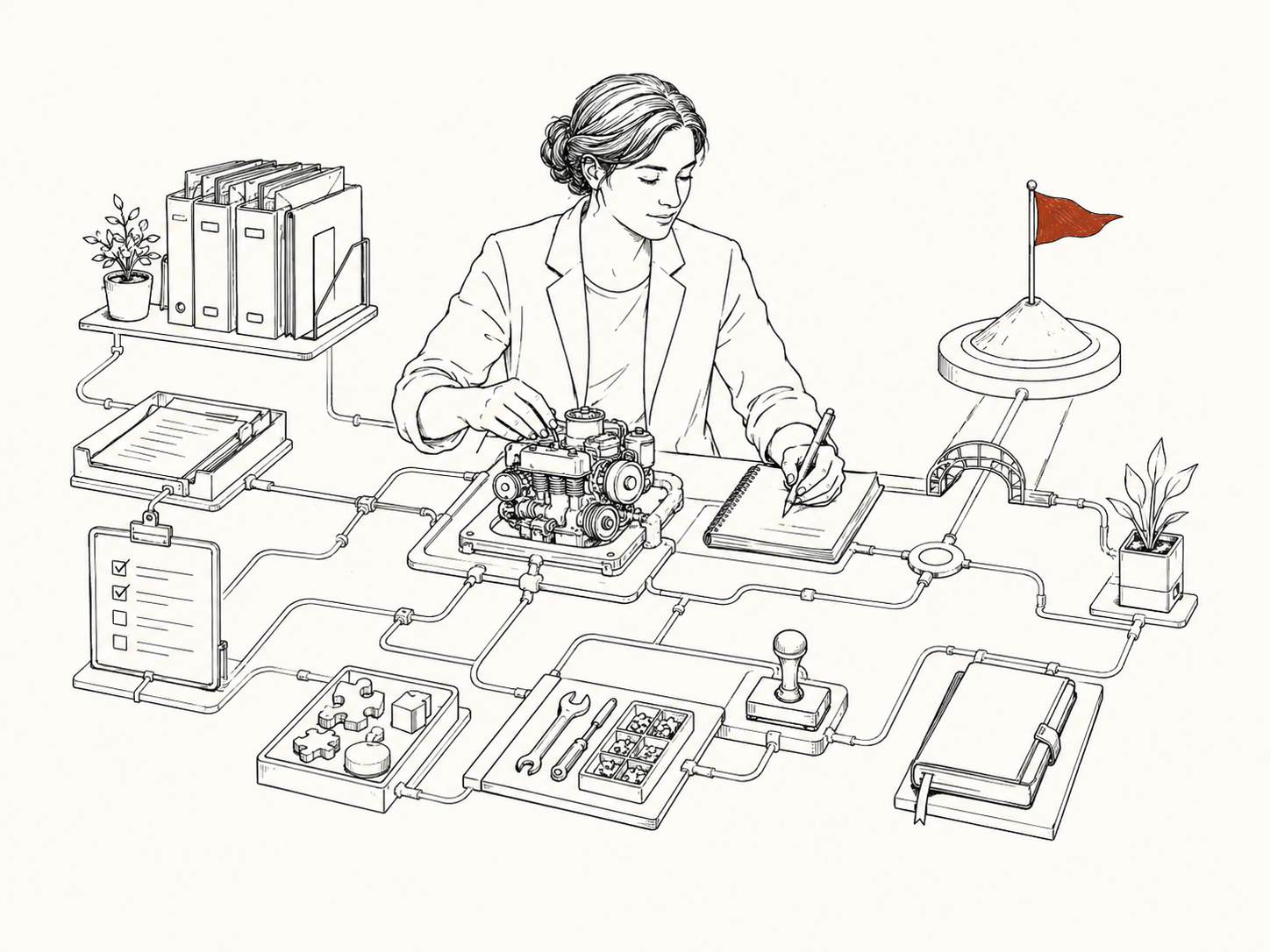
The model answers. The harness organizes the work. So do not ask, "Which AI should I buy?" Ask, "What working system have I built around the model?"
Everyone has the engine. The person who builds a working system around it gets moving.
The chapter in four steps
01
The same access
Lena and Maxim use the same model. Six months later, one gets drafts while the other has a working process.
02
The harness
A harness is the agent's workspace: rules, context, tools, memory, verification, a sandbox, and reusable skills.
03
Your own system
A personal usefulness stack keeps you from starting over: recurring tasks, context, templates, memory, and a clear test for the result.
04
Outcome
The Task-to-Outcome Map shows where you produce output and where you hold the decision, risk, and trust.
Your personal usefulness stack
Layer
What it holds
Common leak
First move
Thinking
the person keeps control of the decision
a polished answer is mistaken for a correct one
challenge the model before reaching a conclusion
Knowledge
context, decisions, constraints
every chat starts from zero
build a context folder
Tools
tools with a clear role
a collection of services replaces a process
keep only the roles you need
Proof
a visible trail of quality
people cannot see how you think
show the path to the decision
Trust
verification and accountability
people do not trust the result
find a verification point
Outcome
a link to the real result
a good document changes nothing
start with a task -> outcome map
What each audience takes away
Specialist
Choose three tasks from this week and find where an AI mistake would be expensive. That is your first verification point.
Manager
Do not ask who uses AI. Find where the team has rules, context, verification, and a memory of past decisions.
Founder
AI makes a small team faster only when the tool connects to an outcome instead of producing more files.
Main takeaway
Value no longer comes from what the model "knows." It comes from the working system a person builds around it.
When Intelligence Became Cheap
Part II | Chapter 7 | Skills that gain value
When anyone can produce a decent result, the market pays for five scarce assets
Output got cheaper. The market does not pay more for "being human" in the abstract. It pays for five specific scarce assets: judgment, taste, trust, attention, and distribution. Authenticity connects them, meaning a provable link between the result and a real person.
The chapter in four steps
01
The display lost value
An AI "band" can have a million listeners. A decent result is no longer proof of mastery.
02
A premium that fades
AI skills earn a premium (+28%, Lightcast), but this comes from an early shortage. It is a reason to enter, not a foundation to build on.
03
Five scarce assets
Judgment, taste, trust, attention, and distribution. Unlike a vague list of "soft skills," each one has a clear reason for being scarce.
04
Authenticity connects them
All five need a name attached to them. As synthetic work gets cheaper, provably human work gains value.
Five scarce assets: where they pay and how to train them
Scarce asset
What it is
Where it pays (Chapter 5 level)
How to train it
Judgment
making a choice without a complete picture or metric
validator and above
check against your own criteria and study your mistakes
Taste
telling good work from merely plausible work
validator to orchestrator
study the best work and live with the results of your choices
Trust
the right to work without constant rechecking
outcome owner
make promises under your name and say honestly, "I am not sure here"
Attention
decision makers see your work
orchestrator and above
leave a regular visible trail through reviews and demos
Distribution
your expertise has a channel and an audience
outcome owner to system builder
choose one channel and use it consistently
What each audience takes away
Specialist
Find your strongest scarce asset. It probably already exists but is not recorded. Put your name on it. One asset, one task, one quarter.
Manager
Pay for scarce assets, not words from job listings. Ask which decision changed because of a person's judgment and which mistake their taste helped catch.
Founder
AI made "create" cheaper. The premium moved to "know the pain" and "deliver." Invest in a channel and reputation that survive a change of model.
Main takeaway
The machine learned what people wrote down. What can only pass through practice gains value, along with the person willing to sign their name to it.
When Intelligence Became Cheap
Part II | Chapter 8 | Cognitive debt
Use AI often without giving it your practice
Cognitive debt is a practical metaphor: productivity today in exchange for skill tomorrow. The risk is not AI itself or the "dose." The risk appears when a person accepts a finished answer and drops out of the decision.
The chapter in four steps
01
Automation teaches forgetting
The "children of the Purple Line" show the pattern: a tool removes effort and also removes the practice.
02
A loan of convenience
Faster today does not always mean stronger tomorrow. Sometimes you borrow productivity from your future skill.
03
Early signals
Trust in the model, a ready answer, and pressure for speed all point in the same direction: it gets easier to stop thinking for yourself.
04
The mode matters more than the dose
The cyborg and centaur stay inside the decision. The self-automator simply receives and passes along.
Three ways to work with AI
Mode
How it works
What happens to the skill
How to avoid the debt
Cyborg
keeps a continuous dialog with the model
a new collaboration skill grows
challenge the answer, ask for alternatives, and keep control of the reasoning
Centaur
divides the work in advance: judgment for the person, routine for the machine
the professional decision stays with the person
before asking, decide what you cannot delegate in full
Self-automator
hands over the whole process and barely looks at it
the study found no visible growth in skill
bring back at least one effort: the draft, verification, or defense of the conclusion
What each audience takes away
Specialist
Separate "finished faster" from "became stronger." Choose two or three practice tasks and do not hand them over to AI in full.
Manager
When you automate for speed, do not remove the apprenticeship ladder from the work. If a task used to train people, give them a new way to practice.
Founder
Stay in the loop where your advantage lives: judgment about the customer, product, risk, and timing.
Main takeaway
The machine will take any effort you agree to hand over. Decide in advance which effort you will keep, because that is the one that will remain yours.
When Intelligence Became Cheap
Part II | Chapter 9 | A personal audit of your profession
Being busy is not a diagnosis. You need a map of your value
A personal audit does not judge the whole profession. It looks at real tasks: what is getting cheaper, where a person is still needed, what proves your value, and which next foothold you can reach.
The chapter in four steps
01
Busyness can fool you
You can finish more tasks while producing more of something that keeps getting cheaper.
02
Audit by task
Do not ask whether a profession will be replaced. Ask which tasks are getting cheaper and which ones support your value.
03
A map to the outcome
Review three or four tasks: what you do, why it matters, what AI handles, where a person is needed, how to measure it, what to stop, and where to move up.
04
The next foothold
A career is like a climbing wall. You need to know where you stand and which move is within reach.
Five coordinates for the audit
Coordinate
Question
What counts as evidence
Risk of fooling yourself
Ladder
Where is the role vulnerable: entry, middle, or top?
Changes in tasks and role over the past year
confusing the title with the real work
Level
Where from 0 to 5 does your week take place?
Three outcomes and your responsibility for them
calling output an outcome
Mode
Where do you stay inside the decision with AI, and where do you drop out?
One recent task
mistaking speed for skill growth
Weak layer
What is missing from the system around your work?
A failure, lost context, or missing proof or trust
assuming everything can stay in the manager's memory
Durable value
What is hardest to copy quickly?
A returning customer, a caught error, or a trusted decision
calling a desired strength an existing one
What each audience takes away
Specialist
Map three or four tasks and find one area where you slipped into self-automation.
Manager
Audit the team's roles. Find where people produce an artifact that is getting cheaper under an impressive title.
Founder
Look beyond the product. Find deep knowledge of the customer's pain, taste, trust, and a channel that reaches the customer.
Main takeaway
Do not judge a profession as one unit. Break it into tasks and see which ones still carry your name.
When Intelligence Became Cheap
Part II | Chapter 10 | Identity
When AI does your work, you lose a role, not your whole self
This chapter brings the professional audit down to a human level. Do not silence the fear that says, "I am no longer needed." Name it, then separate the person from the old role and its label.
The chapter in four steps
01
Name the fear
Skills are only part of the issue. A quieter question sits underneath: if the machine does the work, who am I?
02
Separate the role
Losing work hits income, status, and mastery. But a role is not the whole person.
03
Move your foundation
The old "I produce X" is weaker now. Build the new foundation on judgment, accountability, and trust.
04
Bring meaning back
Freed time creates a fork in the road. You can fill it with more routine or move into deeper work with people and outcomes.
The old foundation and the new one
Layer
Old formula
What AI does
Where to shift your weight
Label
"I am an analyst, lawyer, or person who writes code"
weakens the monopoly on familiar output
the role is not the whole person
Judgment
"I made the file"
produces options and drafts
"I decided it was good enough"
Accountability
"the model calculated or wrote it"
speeds up action but accepts no obligation
the person and company answer for the consequences
Trust
"they bought the report or service"
turns the artifact into a commodity
they buy your judgment with it
What each audience takes away
Specialist
Name exactly what you fear losing. Rewrite "I make X" as "I am responsible for Y."
Manager
Do not repeat "everything will be fine" to the team. Show them the new role: judgment and accountability, not the volume of output.
Founder
Do not confuse a more efficient business with your own lack of value. Your foundation is the customer's pain, your taste, access, and trust.
Main takeaway
The machine took what you did. It did not take the person who decided why it should be done.
When Intelligence Became Cheap
Part II | Chapter 11 | The plan
Do not set out to "master AI." Make one verifiable move in 90 days
This chapter turns the map from Chapter 9 and the foundation from Chapter 10 into action: one recurring task, one old rule, one human capability, and one result you can verify.
The author's example: a contract workflow
BeforeA standard contract often went through an outside legal review that took four or five days.
AfterThe first review now uses an internal issue library and an AI system. A standard cycle takes hours instead of days.
BoundaryThe lawyers did not disappear. They are still needed for unusual risks, negotiations, disputes, and decisions where a mistake would be expensive.
The chapter in four steps
01
Do not stop at the diagnosis
A career map does not fix anything by itself. If you work tomorrow as you did yesterday, the anxiety returns.
02
Choose one task
You do not need a new life. Choose a place where others will notice the improvement and where the new method can be repeated.
03
Build a 30/60/90 plan
Month 1: define the workflow. Month 2: make the change and prove it. Month 3: take more responsibility.
04
Keep the person in the work
AI takes the rough work. Judgment, verification, risk, and sign-off remain human.
The plan on one page
Field
Question
A good answer looks like this
Task
Where do I repeat work and have room to change the method?
not "master AI," but a specific report, contract, review, or customer cycle
Rule
Which old rule will I stop following?
"I produce the output myself" becomes "I answer for the outcome"
Capability
What will I refuse to hand over to the machine in full?
judgment, taste, the question, verification, explanation, or trust
Proof
How will anyone know the work changed?
a before-and-after metric, a decision, feedback, a working document, or a public review
Next level
Which outcome will I take more responsibility for?
not a promotion, but a new type of contribution inside one task
What each audience takes away
Specialist
Fill in your 90-day sheet: one task, one new rule, one capability, and one change you can verify.
Manager
Do not turn the plan into a quota. Help the person choose a task where AI frees their judgment instead of consuming it.
Founder
Ask the same question about the business: which recurring work should stop depending on every hour of your time?
Main takeaway
The diagnosis shows where you stand. The plan is your first step from there. A machine cannot make that move for you. Only a person can decide to act.
When Intelligence Became Cheap
Volume 1 | Epilogue | The transition
Volume 1 ends with the person. The next question reaches beyond your desk
The epilogue adds no new method. It brings together the path through Volume 1: from cheap intelligence and professions breaking apart to a personal map, a new foundation, and your first 90-day plan.
The epilogue in four steps
01
Intelligence got cheaper
The machine did not come only for routine work. It automates some of the work that once seemed to protect people.
02
The profession broke apart
Not everything disappears at once. Some tasks get cheaper, others gain value, and value moves toward the outcome.
03
The person rebuilds
The map, system, skills, audit, identity, and plan restore a foundation through action, not through a promise of safety.
04
The scale grows
A personal move changes a team, a process, and a business. Volume 2 takes the same way of seeing into a larger world.
The bridge between the two volumes
Scale
What Volume 1 gave you
What Volume 2 opens
Person
see yourself on the map and choose the first move
act with verification instead of waiting for certainty
Team
see where AI takes output and where a person is needed
organize the work of people and agents without the old illusion of control
Company
see that personal usefulness depends on outcomes
rebuild processes, products, and accountability around the new price of intelligence
World
accept that more than your profession is changing
examine the labor market, children, education, and the rules of the game
What each audience takes away
Specialist
You can close the volume with an action already in hand. You have the map, you named the foundation, and the 90-day plan is on your desk.
Manager
One employee's adaptation quickly becomes a question of team design: who verifies, who decides, and who answers for the result?
Founder
"Where is my usefulness?" becomes "How should I now organize a company and market around cheap intelligence?"
Main takeaway
You do not need to read further before you start. Sooner or later, though, your personal move will reach beyond your desk. Volume 2 begins there.